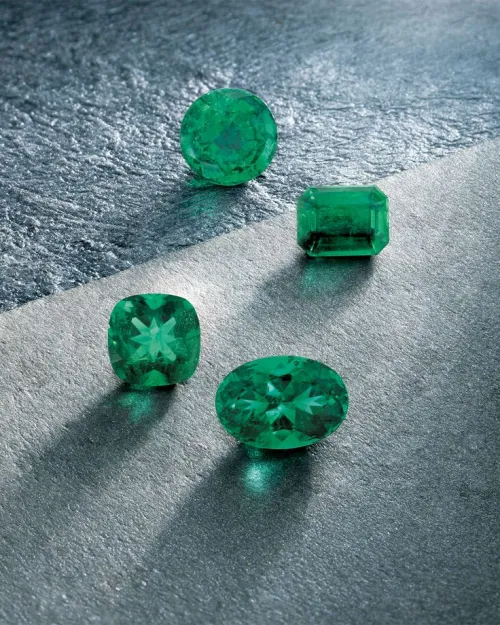
Picture running your fingers over your grandmother’s emerald ring before a client meeting, noticing how its green depths shift under fluorescent lights. Or contemplating earrings that transition from office daylight to warm restaurant glow. Choosing companion stones for emeralds goes beyond mineralogy – it’s about how textures converse on skin tones, how daylight reveals color undertones in transit, or how evening lighting transforms subtle contrasts in layered necklaces. Some prioritize scientific durability metrics; others value intuitive aesthetic resonance across daily contexts like polished conference rooms, sun-drenched terraces, or humid garden parties. Where does your focus lie?
If you instinctively notice how colors shift from morning to artificial light, this section connects chromatic theory to your everyday encounters. Focus here when creating pieces meant to traverse multiple environments.
The most resonant emerald pairings create subtle tension through complementary undertones rather than matching hues. Blue sapphires may appear bolder under cool Nordic daylight but harmonize in warm interiors due to shared mineral depth, while diamonds provide neutral brilliance without altering the emerald’s core character. Beyond color, prioritize stones within similar refractive indices (1.57-1.77) to control how artificial lighting alters their conversation - noticeable in elevators transitioning from halogen to LED.
Emeralds reveal hidden character through adjacent stones: rubellites intensify their warm undertones during golden hour, while London blue topaz cools their depth under overcast skies. Pairings function differently across three critical contexts – direct sunlight may intensify pale aquamarine’s glow beside deeper greens; office fluorescents might merge mint garnet with emerald; candlelight could soften diamond borders into halos. This isn’t about rigid rules but observing how your typical environments re-stage mineral relationships daily.
This speaks to anyone who’s winced at chipped edges or foggy stones – it’s about engineering jewelry integrity through commutes, workouts, and kitchen splatters without losing beauty.
Daily wear stresses gem pairings at their geological fault lines. Combining emeralds (7.5-8 Mohs) with stones above 8 like diamonds reduces abrasion risks where surfaces meet – particularly critical in eternity bands where finger-squeezing may accelerate abrasion. Bezel settings protect softer combinations at cocktail parties where handbag clasps might snag prong-set softer stones, while channel settings guard edges during commuting.
Consider pavé-mounted diamonds beside emeralds: while visually stunning, their crevices may accumulate hand cream residue on work keyboards – a tension between form and function. Temperature shifts during outdoor commuting can induce micro-fractures in more brittle pairs; tension settings mitigate this through flex but demand regular torque checks. The choice becomes which vulnerabilities align with your ritual movements.
This perspective weighs beauty against longevity – useful when purchasing anniversary gifts or designing heirlooms that endure beyond fleeting trends.
Secondary stones needn’t match emeralds’ value to create resonant pairings. Laboratory-created versions of ruby, spinel, or moissanite may replicate optical effects without compromising cohesion – particularly effective in pendant designs viewed beyond close range. Saltwater pearls introduce organic contrast at accessible tiers, though they’ll show degradation around pools faster than moonstone alternatives.
Scrutinize cut uniformity: differing facet patterns on paired stones can create visual static under office lights. Well-chosen combinations show consistent light return – lift jewelry toward daylight and watch for abrupt dead spots. Durability shows in subtle indicators too; softer stones like lapis lazuli develop matte micro-scratches faster where contact occurs, especially in active lifestyles.
Recall what drew you here: was it a ring needing resilience against daily commutes? Earrings transitioning fluidly from meeting to gallery opening? Notice which friction points resonate most. If hardness compatibility matters, focus on Mohs 7.5+ pairings like blue goldstone or durable corundums. Prioritizing color dialogue? Test stones against skin undertones under your most frequented lighting types – smartphone flashlight for evening, sunlit windows at breakfast. There are no universal solutions, only thoughtful alignments. Perhaps start with single accent pieces testing how diamonds perform under work LEDs or how sapphires age alongside emeralds over years – allowing your context to shape future pairings gradually.
Q: Can pearls realistically pair with emeralds?
A: Freshwater pearls offer beautiful textural contrast but avoid combinations for frequent hand-washers; saltwater environments accelerate degradation. Consider nacre-protective settings and reserve for special events.
Q: What’s the most adaptable pairing across lighting conditions?
A: Diamonds maintain consistent interaction across environments, while dark blue sapphires provide dependable contrasts. Note that moonstone can shift dramatically from office to candlelight.
Q: Does pairing affect cleaning routines?
A: Ultrasonic cleaners might compromise fracture-filled emeralds while being harmless to diamonds. Always clean according to the most sensitive stone in the arrangement.


$
