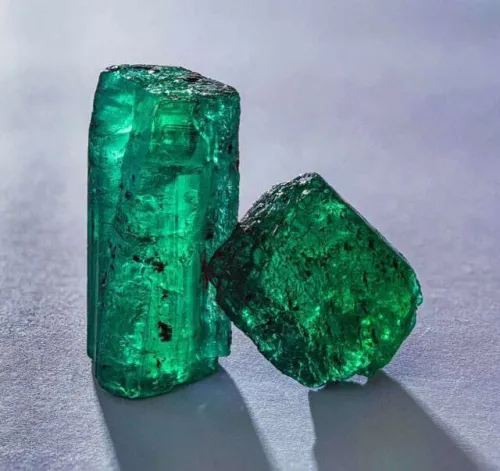
Picture your favorite emerald piece—a ring reflecting soft indoor lighting during work hours, or a pendant that glimmers against twilight cityscapes. These moments reveal not just color depth but subtle clues about its journey. Maybe you’ve noticed a faint line on the surface while cleaning it post-dinner party, or hesitated before sliding that bracelet on for a commute. Emeralds invite admiration for their rich, botanical greens, yet their physical resilience connects intimately with how we inhabit spaces: office desks, crowded subway rides, jewelry boxes shared with harder gemstones. This question often arises precisely when we see that first faint mark—a small interruption in its watery glow that makes us wonder how it happened, how to prevent more, and whether a gem this captivating can truly withstand the rhythm of daily life.
For readers focused on core resilience facts—whether buying their first emerald piece or evaluating long-term wear—this section breaks down mineral properties without technical overload.
Surface scratches emerge primarily due to encounters with harder objects—a reality rooted in its mineral composition. Emeralds typically exhibit a Mohs hardness of 7.5-8, making them more resistant than common particles like dust or sand but vulnerable to quartz countertops or diamond-tipped jewelry stored together. This mid-range hardness stems from beryl composition: silicon-aluminum structures that reflect light beautifully but can chip or scratch under concentrated pressure. The stone's natural inclusions—those signature mossy flaws called "jardin"—further affect stability, creating microscopic pathways where surface marks may develop.
Not all emeralds respond equally to pressure; vulnerability hinges on distinct physical characteristics. Those with dense internal gardens of inclusions may show micro-scratches sooner than clearer stones, as internal fractures disrupt surface continuity. Treatments like oil enhancement (common for filling natural fissures) can soften scratch resistance temporarily—though modern sealing alternatives offer improved durability. Setting style equally matters: bezel-protected cocktail rings generally outlast exposed prong designs in bumpy commuting environments. Even lighting affects perception; a tiny hairline may disappear in soft restaurant candlelight but become apparent under midday office fluorescents.
For collectors and daily wearers prioritizing real-world resilience, this section translates hardness science into home offices, public transit, and social gathering scenarios.
Minor abrasions develop incrementally through overlooked moments: typing with a ring against laptop surfaces, or dangling bracelets clinking against porcelain sinks. While unlikely during calm desk work, impacts may occur during:
Noticeable wear builds over years rather than weeks—often becoming visible under magnification before affecting naked-eye appreciation. Surface gloss may diminish subtly where scratches cluster, particularly around table edges on frequently worn rings. Yet such changes rarely compromise the gem's color depth or nocturnal luminosity.
This section helps owners identify early signs or evaluate acquired pieces by translating technical clues into visual assessment techniques.
Begin inspections under consistent lighting—preferably indirect daylight near windows. Slowly rotate the piece while observing how light glides across curved facets:
Dust-free surfaces reveal the clearest evidence; gently wipe pieces first with microfiber cloths. Lighting angle dramatically affects visibility—scratches parallel to light sources become nearly invisible, while perpendicular angles maximize shadow definition. Kitchen downlights and office fluorescents often highlight flaws missed by boutique jewelers' warm spotlights.
For those focused on generational heirlooms or preventing new marks, these evidence-based strategies extend beyond basic cleaning.
Preventing scratches integrates seamlessly into existing routines rather than demanding impractical changes:
Professional services offer more than cosmetics; specialized polishing techniques gently soften minor surface marks without aggressive recutting. Protective enhancements like microscopic polymer coatings—while controversial among purists—provide temporary shields against kitchen mishaps or travel chaos.
Caring for emeralds honors their unique dualities: gemstone radiance paired with mineral vulnerability. Begin with handling changes:
Storing separately prevents 80% of incidental abrasions—a silk pouch substitutes bulkier boxes for frequent travelers. Schedule annual specialist consultations not merely for cleaning but to monitor surface development; their magnification tools detect hairline marks invisible at home. Avoid ultrasonic baths which jolt inclusions and exacerbate micro-fractures. Instead, pre-empt environmental dust accumulation with weekly gentle buffing using untreated 100% cotton cloths—this maintains hydrophobic properties of any oil treatments while removing scratch-risk particles.
Reflect on how emerald pieces weave through your personal landscape: the office where they sparkle during presentations, their glow against evening fabrics at gatherings, their rest in quiet drawers between events. If you value pristine surfaces, prioritize protective storage and conscious handling—let that ring come off before keyboard marathons. For lovers of naturally evolving objects, gentle cleaning rituals suffice until scratches disrupt visual harmony. Either approach recognizes these stones as companions rather than ornaments. They might not arrive unscathed through decades of living, but each mark could be the imprint of a moment well spent—children held, gardens tended, celebrations toasted. What matters is how its green light still connects you to earth's quiet magic before deadlines resume.
Q: Can washing dishes scratch an emerald?
While occasional water exposure won't harm emeralds, cleaning solutions can deposit quartz residues that create microscratches over repeated cycles. Gloves offer better protection than gem-setting during kitchen tasks.
Q: Does emerald scratch resistance depend on color saturation?
Color itself doesn't affect hardness. However, deeper green stones often contain more inclusions ("jardin"), potentially adding structural vulnerability to forceful impacts or sustained friction against quartz surfaces.
Q: Can existing scratches become invisible again?
Professional polishing significantly reduces shallow scratch visibility by gently smoothing surfaces. This differs from filling cracks with oils—it modifies the gem's exterior while leaving treatments intact.
Q: Do textured finishes hide scratches better than polished ones?
Satined or "sugar-loaf" cabochons disguise marks naturally through light diffusion—unlike faceted cuts where scratches disrupt predictable reflections.


$
