Emeralds are rare green gemstones formed deep within the Earth through specific geological processes, requiring combinations of beryllium, chromium or vanadium, silica, extreme pressure, and heat over millions of years. Their vibrant hues and characteristic inclusions result directly from the tumultuous conditions of their creation.
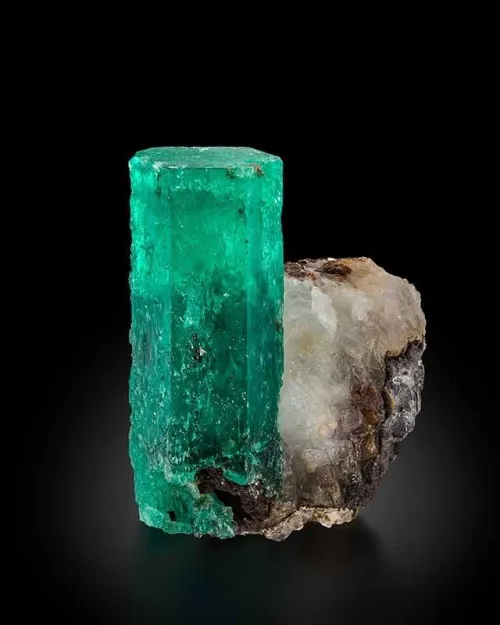
Whether it’s the rich, vegetal green glimpsed on a ring catching office light, the sense of timeless elegance an uncut stone brings to a bookcase display, or simply the curiosity sparked by such a uniquely saturated color in nature, emeralds draw us in. We might admire a piece across a dinner party table, wondering what processes could forge something so radiant, or consider its suitability for daily wear. Some seek fundamental facts: what *are* they? Others focus on the interplay of color and light, its value potential for fine jewelry, the deep geological story locked within, or even how to pronounce 'beryl' correctly. Your perspective shapes what you find most compelling about this stone.
This section is for those needing a clear starting point. Understand emeralds not just as green gems, but as mineral specimens with origins demanding specific, uncommon conditions.
The term "emerald" refers specifically to the green variety of the mineral beryl. What sets it apart is its color, caused primarily by trace amounts of chromium and/or vanadium replacing other elements within the crystal structure during its formation deep underground. Its chemical identity as beryl remains constant, but that precise green coloring is essential. This mineral develops within environments where extreme geological forces create unique chemical pathways.
As a variety of beryl, emerald belongs to the cyclosilicate mineral group. Its hexagonal crystal structure provides fundamental properties like notable durability, though this inherent toughness can be affected by internal characteristics common to its formation. Its gemstone classification stems from this mineral basis plus its desirability. Formation requires specific geological conditions, including high pressures and temperatures in metamorphic environments or related hydrothermal settings. Understanding its composition clarifies why achieving the prized green requires such rare chemical interplay. Physical properties such as refractive indices reflect these formation depths and chemical dynamics.
For readers captivated by the stone’s aesthetic impact—its depth of color in different settings, the ‘feel’ hinted at by its texture, or the unique markers of its origin—this group explores visual and sensory aspects. Notice how these characteristics define its unique allure under various lights, like the morning sun through a window hitting a ring, or the focused lighting in a showroom display.
The color saturation and even perceived tone of an emerald can change subtly depending on the lighting environment. Under direct, cool-toned LED office lighting, a high-clarity stone may appear more vivid and slightly bluish, while the warm glow of sunset might deepen its green towards forest hues. This phenomenon occurs because trace metal ion distributions within the crystal structure interact uniquely with different wavelengths. Its visual appeal is intrinsically tied to transparency ranges from highly translucent to cloudy forms.
The signature inclusions within most natural emeralds—often called the jardin (garden) because of their varied forms—are its fingerprints of origin. These include crystalline deposits trapped during growth, tiny fractures healed over time, or faint veils of fluids. Rather than mere flaws, they reveal the complex environmental conditions present during formation and provide critical evidence differentiating natural stones from synthetic counterparts.
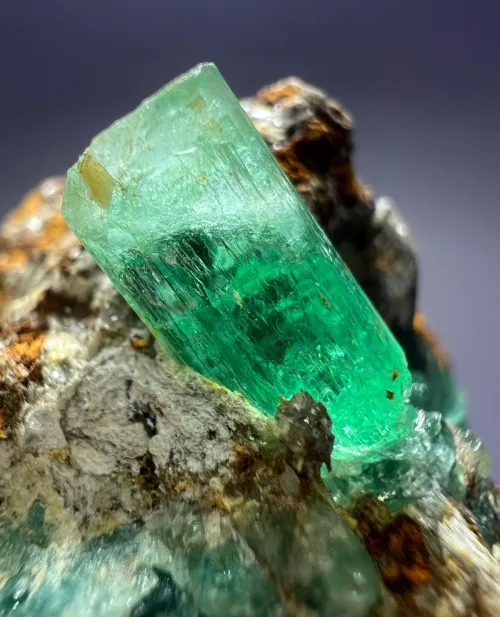
Surface luster in emeralds varies significantly based on crystal quality when viewed under natural daylight or standardized gemological equipment. A finer crystallization results in a smoother, more vitreous (glass-like) sheen, influencing how light flows across its facets. Maintenance practices often include gentle cleaning techniques precisely to preserve these natural fractures and inclusions critical to its authenticity. Over decades of handling, whether in a cherished necklace worn daily or a statement ring for evenings out, minor surface wear can become apparent.
This section delves into the remarkable geological journey required to create an emerald. If you're captivated by forces acting over geological time deep within the Earth's crust – where heat, pressure, and chemistry combine uniquely – read on.
Emerald genesis is a complex and relatively rare geological event. Crystals develop gradually, not from molten rock, but from silica-rich solutions moving through fractures deep in rock layers through hydrothermal processes. This requires specific geological conditions: high pressures and temperatures found in boundary zones between different rock types deep underground. Key ingredients—primarily beryllium, chromium or vanadium—often originate from entirely different source rocks needing to be brought together, frequently near shifting tectonic plates. Crystals develop gradually from silica-rich solutions through hydrothermal processes deep underground.
Chemical impurities are the alchemists creating the magic. Chromium or vanadium, substituting for aluminum within the growing beryl structure, absorbs specific wavelengths of light, resulting in the iconic green. Finding beryllium-bearing rocks coexisting with chromium- or vanadium-rich rocks is uncommon, necessitating tectonic shifts to create specific environments enabling these chemical interactions. The structural features, including hexagonal formation patterns, influence the stone's overall durability. Different geographic origins yield unique internal color zoning patterns detectable with magnification, a direct clue to subtle variations in conditions.
Emeralds form primarily in hydrothermal veins cutting through host rock, like schists or limestones, or in regions of metamorphism where ancient rocks have been intensely heated and squeezed deep within the Earth. Finding significant deposits involves targeting areas featuring the crucial geological ‘convergence’ needed: sources for beryllium encountering sources for chromium or vanadium. Specimens represent specific geological eras through observable markers in their crystal structure and inclusions. Birefringence effects visible under polarized light reveal crystallographic orientation history, a telltale signature of its formation stress.
Whether contemplating a significant purchase, assessing a family heirloom, or simply understanding market appreciation, this section addresses evaluating emeralds. Consider how authenticity, durability, and suitability match your lifestyle – be it delicate rings worn daily or a protected pendant for special gatherings.
Distinguishing natural from synthetic emeralds often involves analyzing growth patterns microscopically and examining inclusions. Natural specimens typically contain inclusions (jardin) characteristic of their formation environment, like hexagonal growth tubes, tiny mineral crystals (e.g., calcite, pyrite), or healed fractures. Synthetic versions exhibit telltale patterns lacking such random, chaotic natural signatures. Natural inclusions serve as evidence of the specific environmental conditions during formation. Fluorescence under ultraviolet sources can also sometimes reveal clues about mineralization processes.
Quality hinges on the interplay of color, transparency, cutting precision, and clarity. Color saturation and hue are paramount – a strong, vibrant green without excessive greyness is ideal. However, most natural emeralds exhibit inclusions. Evaluating quality involves weighing how well the color projects despite inclusions under various lights: Does it retain its vitality in a sunlit room or a softly lit dinner? Hardness levels relate to crystallographic integrity and may affect long-term structural stability against potential chipping, a factor for frequent wear. Adaptability for decorative purposes must consider the inherent fragility from vein-filled environments. Surface luster, often observed under standardized gemological equipment or strong indirect daylight through a window, reveals cutting and natural polish quality. Exposure to extreme temperatures could cause undesirable color changes over extended periods.
Here we address focused questions often arising about emerald formation and nature, aiming for concise factual answers informed by the geological science.
Do emeralds form alongside diamonds? Unlikely. They require very different conditions: diamonds form much deeper within the mantle under immense, steady pressure; emeralds form closer to the crust in specific hydrothermal/metamorphic settings. Can they lose color? While highly stable under normal conditions, significant exposure to extreme heat may cause fading or shifting color over the very long term or in specific chemical exposures. Are all green beryl stones emeralds? Traditionally, only green beryl colored by chromium/vanadium qualifies; green beryl colored solely by iron is typically termed 'green beryl.'
Emeralds serve as geological time capsules. Specific inclusion types, three-phase (solid-liquid-gas) inclusions, can literally trap the fluids present during formation. Distinct color zoning patterns documented under magnification often link directly to the unique chemical conditions of specific mines or geological events. Fluorescence observations and crystallographic optical properties provide data about the pressures and temperatures involved. Specimens represent specific geological eras through observable markers.
Emeralds, born from deep time and immense geological pressure, offer more than flashes of desirable color. Consider which facets resonate most deeply with you. Perhaps it’s the core scientific understanding of their rarity and formation that sparks interest. You might be primarily drawn to their visual presence – how an emerald pendant shifts subtly under changing light throughout the day, complementing different outfits and moods, or how a small specimen offers a vibrant, earthy accent on a bedside table. If geological narrative captivates, let the stone be a tangible reminder of our planet’s inner workings.
When considering these remarkable gems, focus resonates outward. If visual clarity matters most, prioritize learning to recognise how light transforms its green and the presence of characteristic inclusions. For scientific interest, the story of deep Earth chemistry and rare mineral convergence offers endless fascination. And if practical assessment is your intent, remember the interplay of color, durability, and suitable jewelry design. Understanding these origins doesn't just inform your perspective; it might guide how you choose to engage with this unique green – whether it’s appreciating a subtle green glint on your wrist during your commute or selecting a piece knowing the monumental conditions required to form it. Let it be one way your appreciation of nature's deep artistry subtly shapes what you surround yourself with.
Q: Can emeralds actually form near volcanoes?
A: While volcanic activity is common on Earth, the specific chemical conditions needed for emerald formation (beryllium meeting chromium/vanadium under high pressure and heat) are far more typically associated with deep metamorphic processes or hydrothermal activity in older rock crusts, not active volcanoes.
Q: Does deeper green automatically mean better quality?
A: While deeper, more vibrant green is often highly prized, other factors critically influence value: the saturation and purity of the hue (avoiding excessive greyness or brown undertones), the transparency allowing that color to project, the presence and nature of inclusions, and the quality of the cut. A lighter emerald with exceptional clarity and a vibrant, pure tone can hold great worth.
Q: What are hydrothermal veins mentioned in their formation?
A: Hydrothermal veins are fractures within rock filled with mineral deposits precipitated from hot, pressurized, mineral-rich water solutions circulating deep underground. It's within these veins, where the necessary elements meet under the right conditions, that emerald crystals can slowly crystallize.


$
