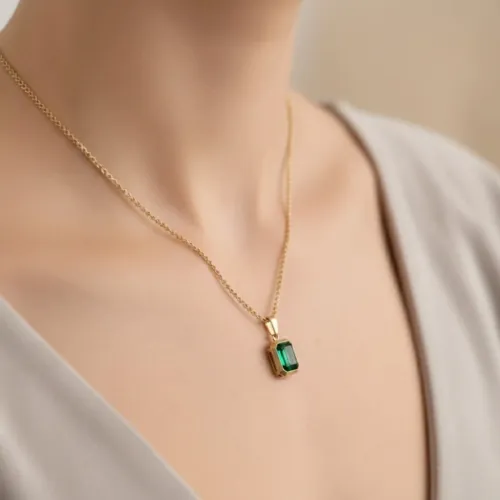
You catch your reflection under the fluorescent office lights - that deep green emerald seems dull against the camel coat, yet glowed brilliantly against navy wool yesterday. Or perhaps you've hesitated buttoning your charcoal pea coat over cashmere gloves, fearing fabric abrasion. Winter accessories demand intentional pairing: Where heavy fabrics swallow delicate jewelry, bulky textures compete with ornate designs, and snow-sparked moisture threatens delicate settings. Some seek efficient strategies for rushed commutes, while others want intricate theories about how lamplight transforms jewel tones. Whether prioritizing practical combinations or exploring subtle color relationships, each approach reveals distinct facets of winter styling.
This section addresses those wanting time-efficient solutions for creating impact between errands and events. Prioritize bold contrasts and secure settings for daily versatility.
Avoid visual overwhelm by positioning the emerald as the sole color statement against monochrome layers. Bolder ring designs tend to contrast effectively with bulky outerwear silhouettes, creating balance through intentional difference in scale. Thinner bands integrate smoothly under knitted textures without creating unnecessary bulk.
Visually oriented readers should focus on how environment alters color perception. Observe how indoor versus outdoor illumination changes gem expression.
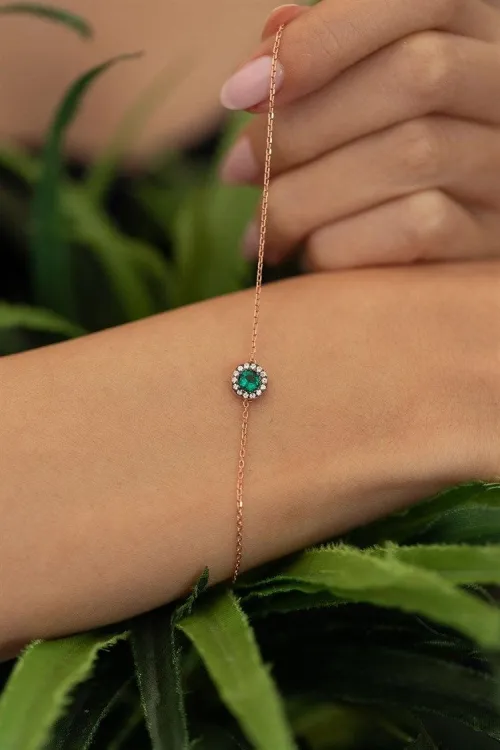
Emerald saturation creates focal points against neutral scarves due to complementary color vibration. Artificial winter lighting may cause marginal shifts in perceived color temperature where natural light remains consistent. Dark coat backgrounds can enhance perceptions of depth and clarity by absorbing light around the gem.
Surface contrasts create visual balance: Pair smooth emerald cuts with chunky knit textures to allow simultaneous visibility. Deep green stones maintain aesthetic impact across varied winter palettes because they don’t compete with common outerwear colors. Avoid placing heavily textured scarves directly against pavé settings where friction points occur.
Those prioritizing daily wear should focus on ergonomic fit and accessibility. Comfort begins with proportional harmony.
Prong settings allow visible gemstone display above glove lines while preventing slippage. Position rings strategically above layered neckwear; this avoids fabric abrasion while maintaining elegance during temperature transitions. Textured scarf designs may harmonize with smooth emerald cuts when separated by wrist or glove layers.
Consider ring height relative to sleeve cuffs to prevent snagging with loosely woven fabrics. Sizing adjustments can accommodate minor finger shrinkage caused by colder temperatures. Lower-profile designs often function better under fitted sleeves.
Readers concerned with longevity should note cold-weather particularities. Focus on material behaviors rather than temporary solutions.
Gold settings offer thermal stability in freezing temperatures while platinum maintains structural integrity under repeated thermal shifts. Moisture exposure from snow necessitates water-resistant setting designs or seasonal application of protective gem treatments. Silver components may show accelerated oxidation during prolonged humidity exposure.
Repeated friction from coat sleeves can develop subtle micro-patina over metallic surfaces. Emerald's inherent hardness supports resilience during repeated contact with heavy woolens but mineral composition remains vulnerable to sharp impacts. Regular polish maintenance counters surface haze caused by seasonal environmental changes.
Whether seeking instant wardrobe solutions or studying material interactions, remember: Green finds balance with neutrals, light transforms stone personality daily, and proportion dictates practical elegance. Keep physical comfort paramount by testing ring heights against cuff widths. Watch for moisture at temperature transition points. Most importantly, allow jewelry relationships with winter fabrics to breathe - a single emerald can shift a look from practical to polished. When mindful of your common scenarios, the pairing feels intuitive rather than orchestrated.
Q: Can I wear an emerald band with leather gloves?
A: Smooth leather interiors cause minimal abrasion, though snug fits may require lower-profile settings. Metal alloy composition matters more than glove material selection.
Q: Does artificial lighting diminish the emerald's green intensity?
A: While natural light reveals complex undertones, modern LEDs showcase balanced brilliance for most daily environments.
Q: How to match with patterned scarves?
A: Restrict patterns to black/grey/white schemes to prevent competition; treat the ring as the dominant color element against patterned areas.
Q: Will repeated cold exposure weaken the settings?
A> Quality metals endure thermal cycling, but brittleness concerns apply to damaged prongs. Regular inspections prevent vulnerability.


$
