Let’s start with the uncomfortable truth the jewelry counter rarely mentions: A heat-treated emerald is not a “fixed” stone. It is a stabilized one, on probation. The process doesn’t erase its flaws; it sedates them, trading immediate perfection for a lifetime of heightened sensitivity.
Imagine a priceless, centuries-old stained-glass window. Now imagine filling its hairline cracks with a modern, clear adhesive to stop it from shattering. It looks whole, brilliant. But you’d never subject it to the same vibrations, temperature swings, or cleaning methods as a new, solid pane of glass. That is the essence of owning a heat treated emerald.
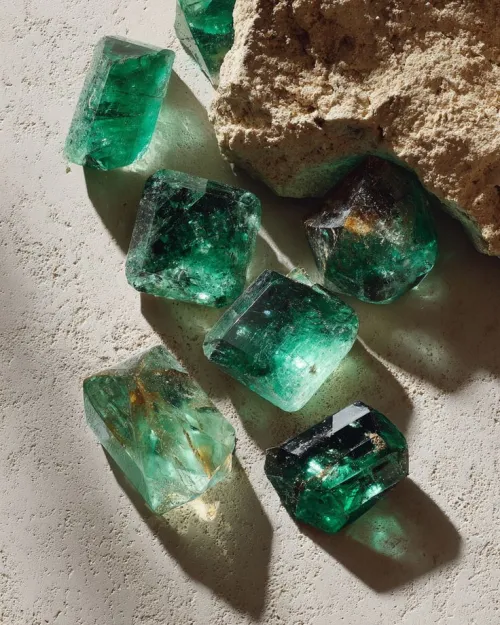
The technical answer is straightforward. Yes, many emeralds undergo low-temperature heat to improve color clarity or stability. It’s common. But framing it as a simple “yes” is a disservice. The better question is: “What am I committing to when I buy one?”
Unlike the robust crystal lattice of a sapphire, which can handle high heat like a forge, an emerald’s structure is more like a delicate, watercolor-painted honeycomb. Heat doesn’t just “enhance” it; it fundamentally renegotiates the tensions between its natural inclusions (jardin) and the coloring agents (chromium, vanadium). This renegotiation is fragile.
“Heat treatment in emeralds isn’t a cure. It’s a truce. And truces require careful peacekeeping.”
You won’t find a label saying “Handle With Extreme Care.” Disclosures can be vague. So, you become the detective. Look beyond the certificate for these subtle clues:
| Context | Heat-Treated Emerald May Show… | Untreated Emerald Typically… |
|---|---|---|
| Under Changing Light (e.g., kitchen to dining room) | A slightly “flat” or muted shift in color saturation. The green may look consistent to a fault. | Exhibits more lively, variable color play (“pleochroism”), with blue and yellow undertones dancing. |
| Under Magnification (10x loupe) | Fractures that appear too clean, glazed, or have a subtle “oil slick” iridescence at their edges from residual fillers. | Inclusions (jardin) look raw, feathery, and three-dimensional. Fractures are sharp and clear. |
| Reaction to Daily Life | May develop a temporary haze when moving from a cold car to a warm room. More susceptible to clouding from soaps or lotions. | Responds to temperature with simple expansion/contraction. Cleaning issues are usually surface-level. |
| The “Feel” Over Years | Requires escalating care. What worked for cleaning in year one may cause clouding by year five. | Aging is more predictable. Care routines remain largely constant. |
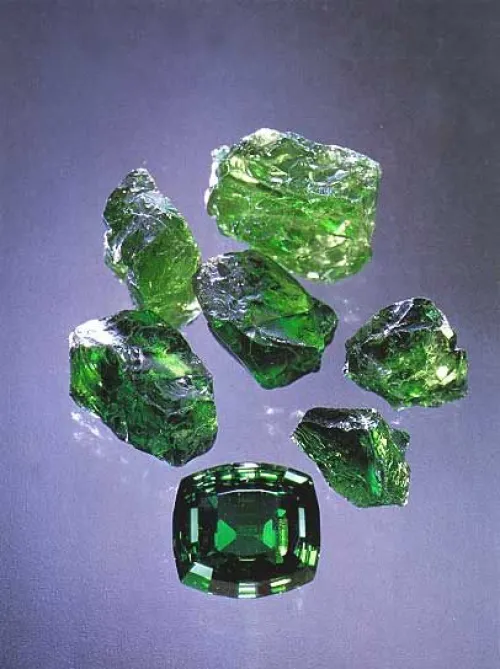
This is where generic “jewelry care” advice fails. Caring for heat treated emerald is a specialized discipline. Think of it as custodianship, not just ownership.
Here’s the deepened, critical insight beyond standard guides. The stability of a heat treatment isn’t permanent. It has a lifespan, influenced by your environment.
We can call it the “Five-Year Itch.” Around this mark, you might notice:
This isn’t failure; it’s physics. The filler materials break down, micro-fractures propagate from residual stress, and decades of subtle thermal cycling (from your body, your home, your climate) take their toll. This is why a relationship with a specialist gemologist is crucial—not for appraisal, but for monitoring.
Before you decide, consider the alternative. An untreated emerald with visible jardin is not a “flawed” stone. It is a truthful one. Its beauty is wild, organic, and resilient. Its care is simpler. Its value lies in its unaltered nature.
Owning one is a different pact: you accept its wild garden of inclusions in exchange for a stone that will age with more grace and fewer surprises. It won’t have that initial, uniform perfection, but it carries a different kind of peace of mind.
Only you can answer that. A heat-treated emerald offers breathtaking color and clarity at a more accessible point. But it comes with strings attached—invisible strings of perpetual caution.
So, ask yourself this: Are you buying a jewel to wear without a second thought, to survive beach vacations and gardening and busy hands? Or are you acquiring a piece of art, aware that its display requires a curator’s mindfulness?
If you choose the treated path, do so with eyes wide open. You’re not just buying a green gem. You’re adopting a delicate ecosystem, one that demands respect, knowledge, and a gentle touch for all its days.


$
